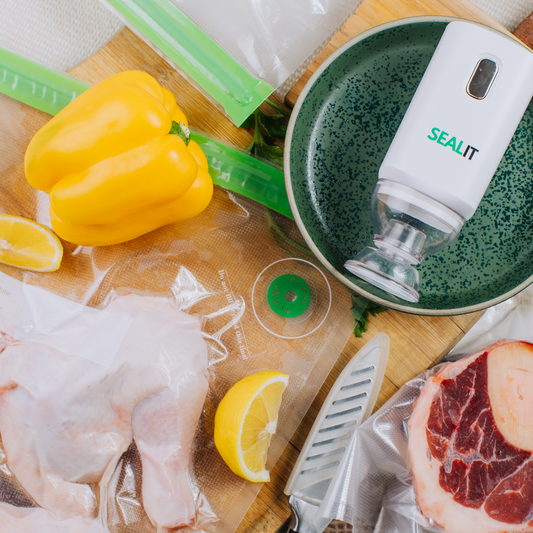
How Does Vacuum Sealing Work?

Vacuum sealing works by removing air from a bag or container and sealing it airtight. By reducing oxygen exposure, vacuum sealing slows food spoilage and helps preserve freshness when food is stored in the fridge or freezer.

The process is designed to limit oxidation and bacterial growth, which are two of the main causes of food going bad.

Step-by-Step: How Vacuum Sealing Works

Vacuum sealing typically follows these steps:
  1. 1

    Food is placed inside a vacuum sealing bag or container

  2. 2

    A vacuum pump removes air from inside the bag or container

  3. 3

    Once most of the air is removed, the opening is sealed

  4. 4

    The sealed food is stored in the fridge, freezer, or pantry

What Happens When Air Is Removed?

Air contains oxygen, which contributes to food spoilage over time. When oxygen is removed through vacuum sealing:

  • Oxidation slows down
  • Bacterial growth is reduced
  • Food dries out more slowly
  • Freezer burn is less likely to occur

These factors help maintain food quality for longer periods compared to traditional storage methods.

How Vacuum Sealing Extends Food Life

Vacuum sealing helps extend food life by creating a stable storage environment.

By limiting oxygen exposure, vacuum sealing:

  • Helps food stay fresher for longer
  • Preserves flavour and texture
  • Reduces waste caused by spoiled food
  • Improves long-term freezer storage

Vacuum sealed food still needs to be stored at the correct temperature to remain safe.

How Different Vacuum Sealers Work

There are different types of vacuum sealing systems, but they all follow the same basic principle of air removal and sealing.

Common types include:

  • Countertop vacuum sealers that seal bags using heat
  • Chamber vacuum sealers used in commercial environments
  • Portable or handheld vacuum sealers that remove air through a valve system

Portable vacuum sealers, such as Seal It, are commonly used for everyday food storage, meal prep, and travel due to their compact design and ease of use.

Does Vacuum Sealing Remove All Air?

Vacuum sealing removes most of the air from a bag or container, but not always 100 percent. Even removing a large portion of air is enough to significantly slow spoilage and improve storage time compared to traditional methods.

Vacuum Sealing vs Simply Squeezing Out Air

Manually squeezing air out of a bag does not create the same airtight environment as vacuum sealing.

Vacuum sealing:

  • Removes more air than hand-sealing
  • Creates a tighter seal
  • Provides more consistent results

This makes vacuum sealing more effective for long-term storage.

Frequently asked questions

No. Vacuum sealing slows food spoilage but does not stop it entirely. Food still needs to be stored correctly and consumed within safe timeframes.

Yes. Vacuum sealing is commonly used for freezer storage and helps reduce freezer burn caused by air exposure.

Yes. Vacuum sealing can be used daily for meal prep, leftovers, and organising fridge or freezer space.